Works · No. 08
A rover team finds a reachable south pole site for a water measurement
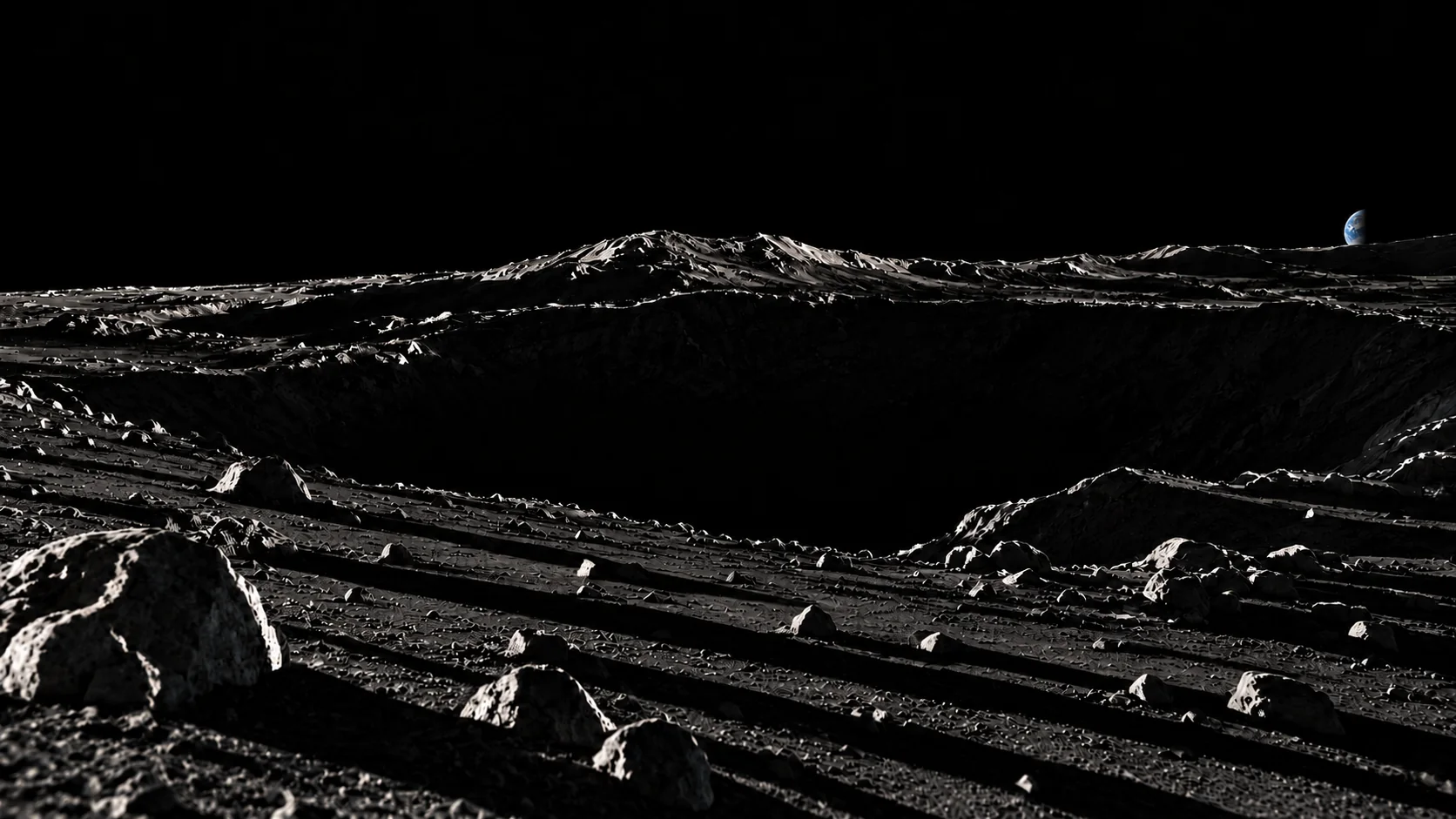
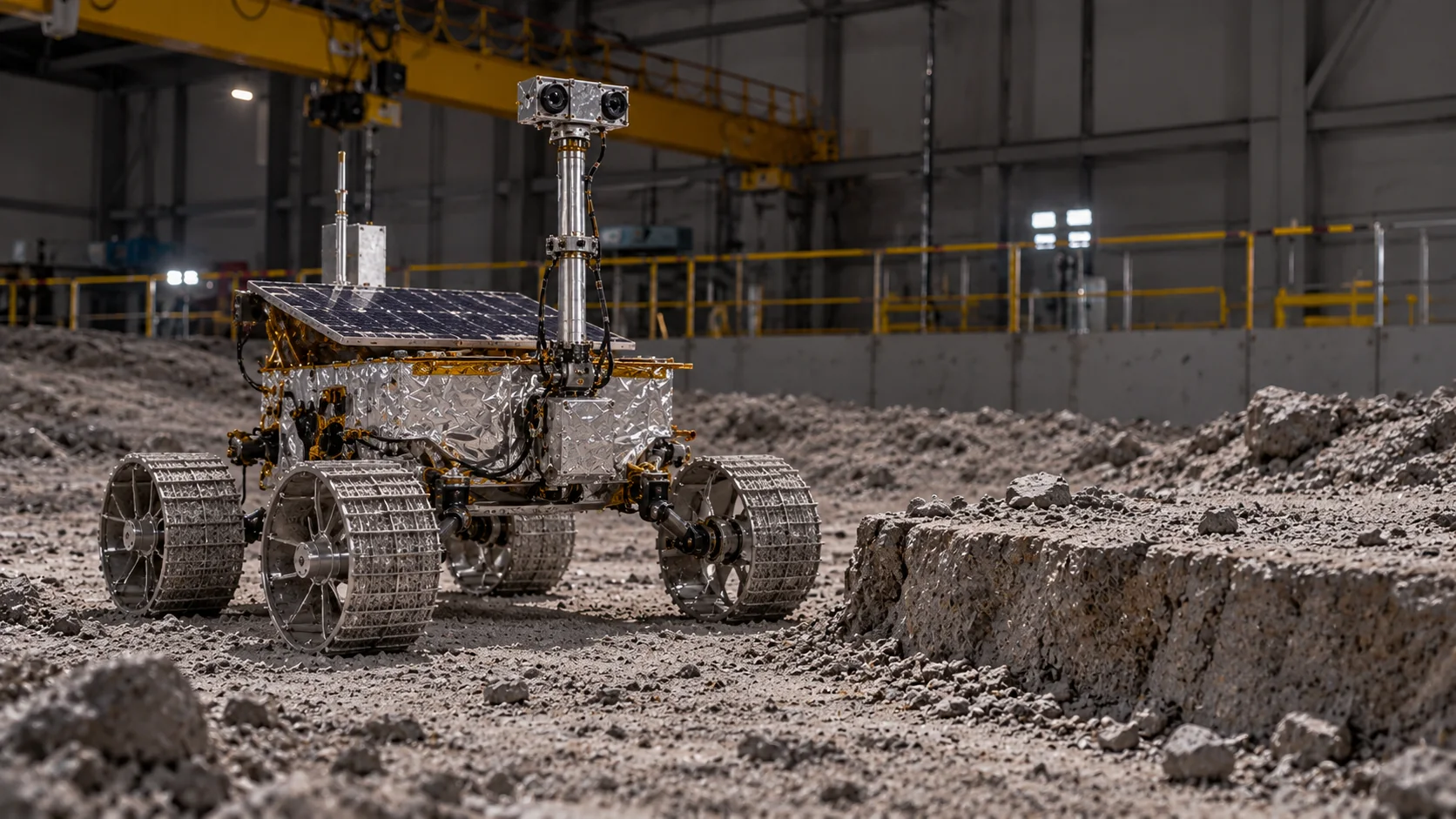
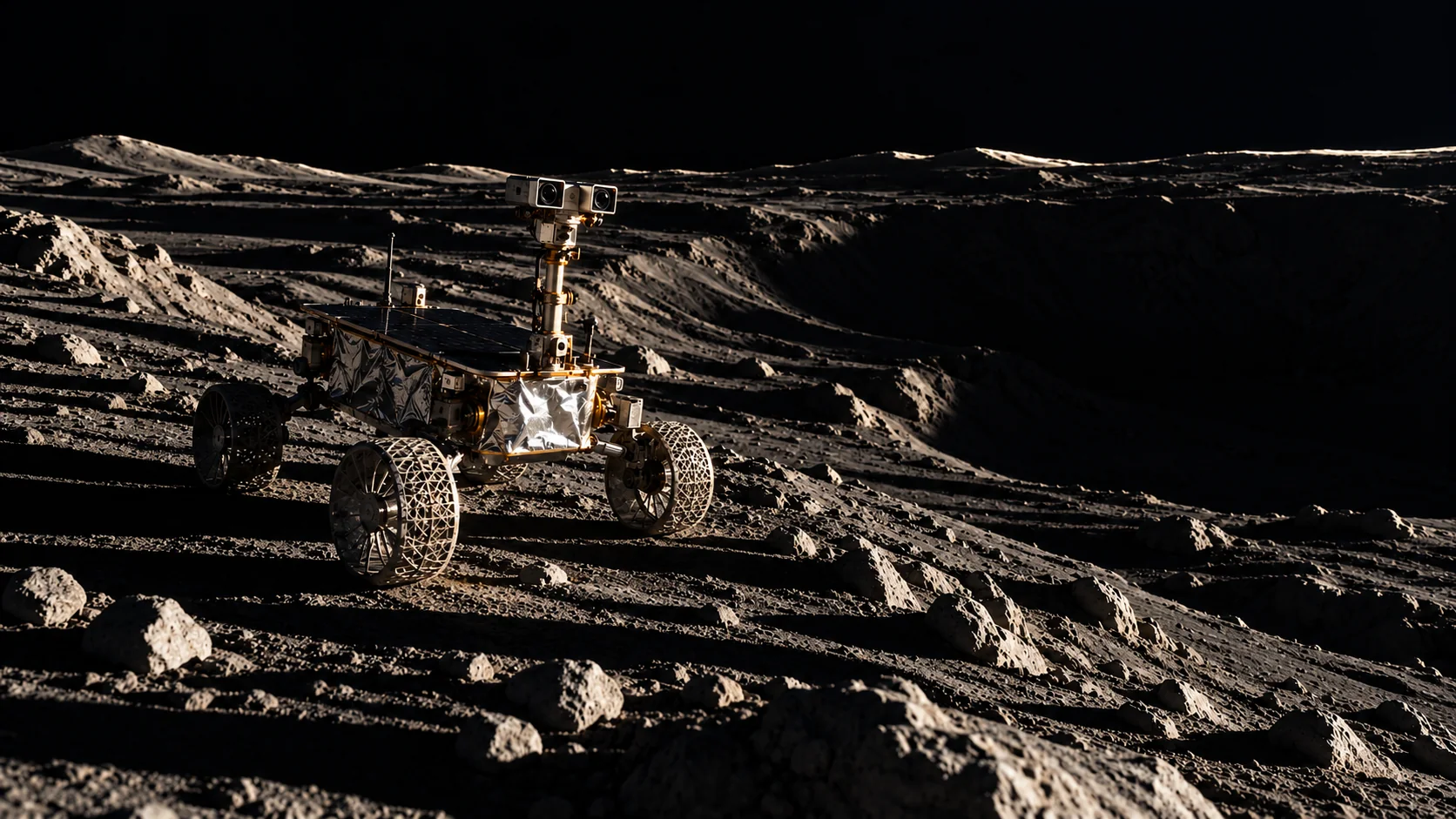
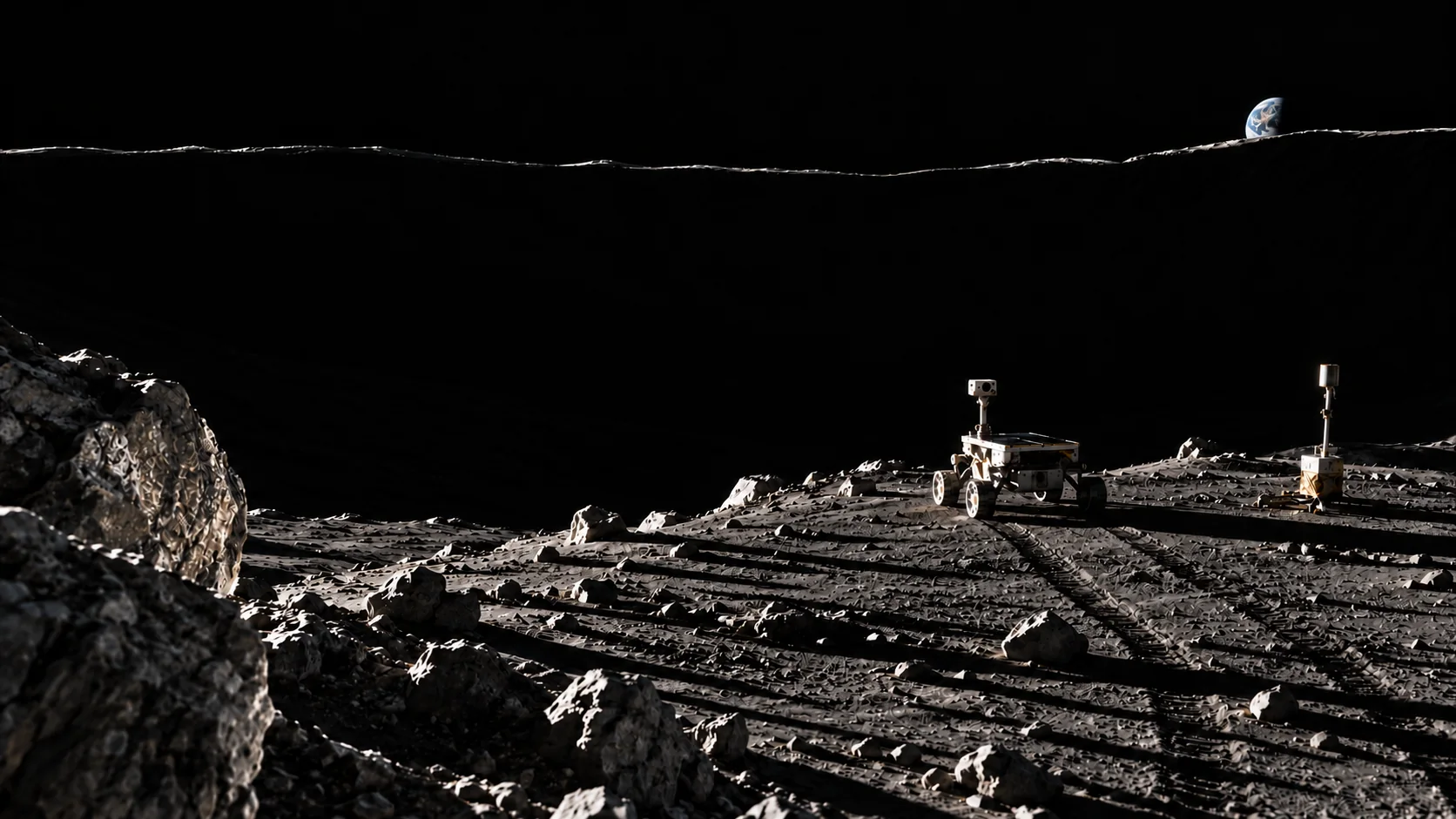
A rover cannot reach the first site chosen for a water measurement at the lunar south pole. Analysis of the rover's position finds a second site it can reach.
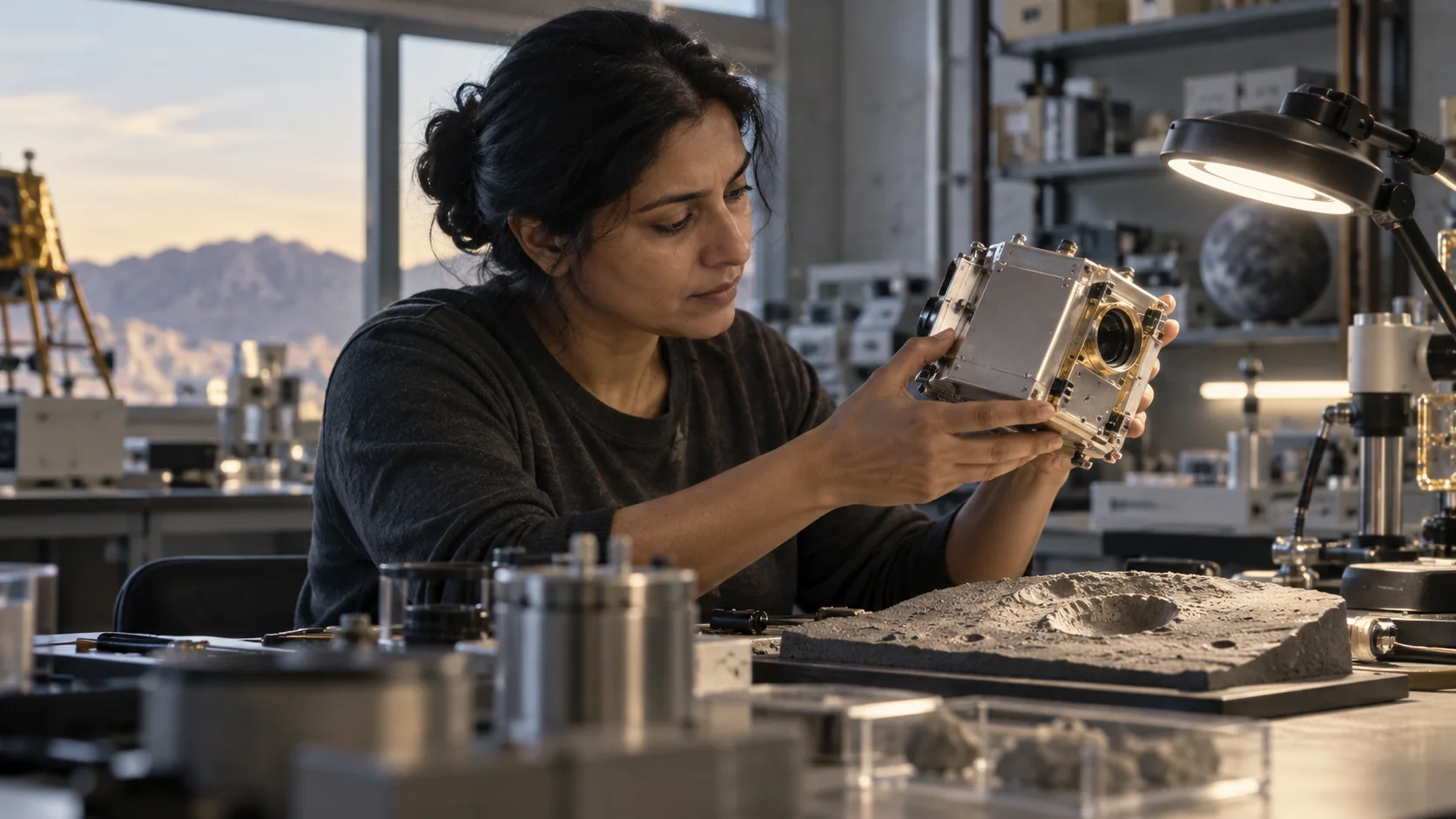
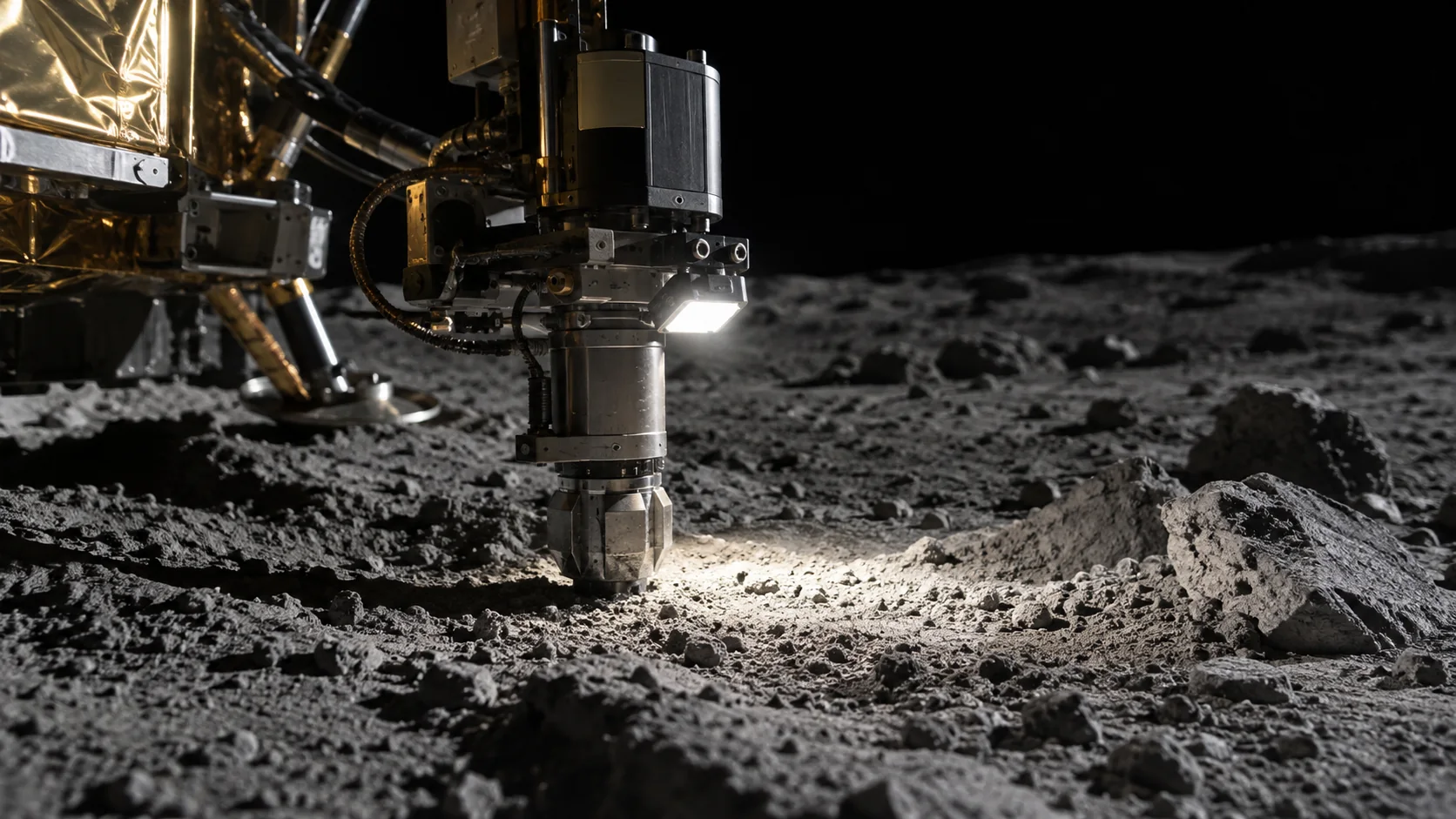
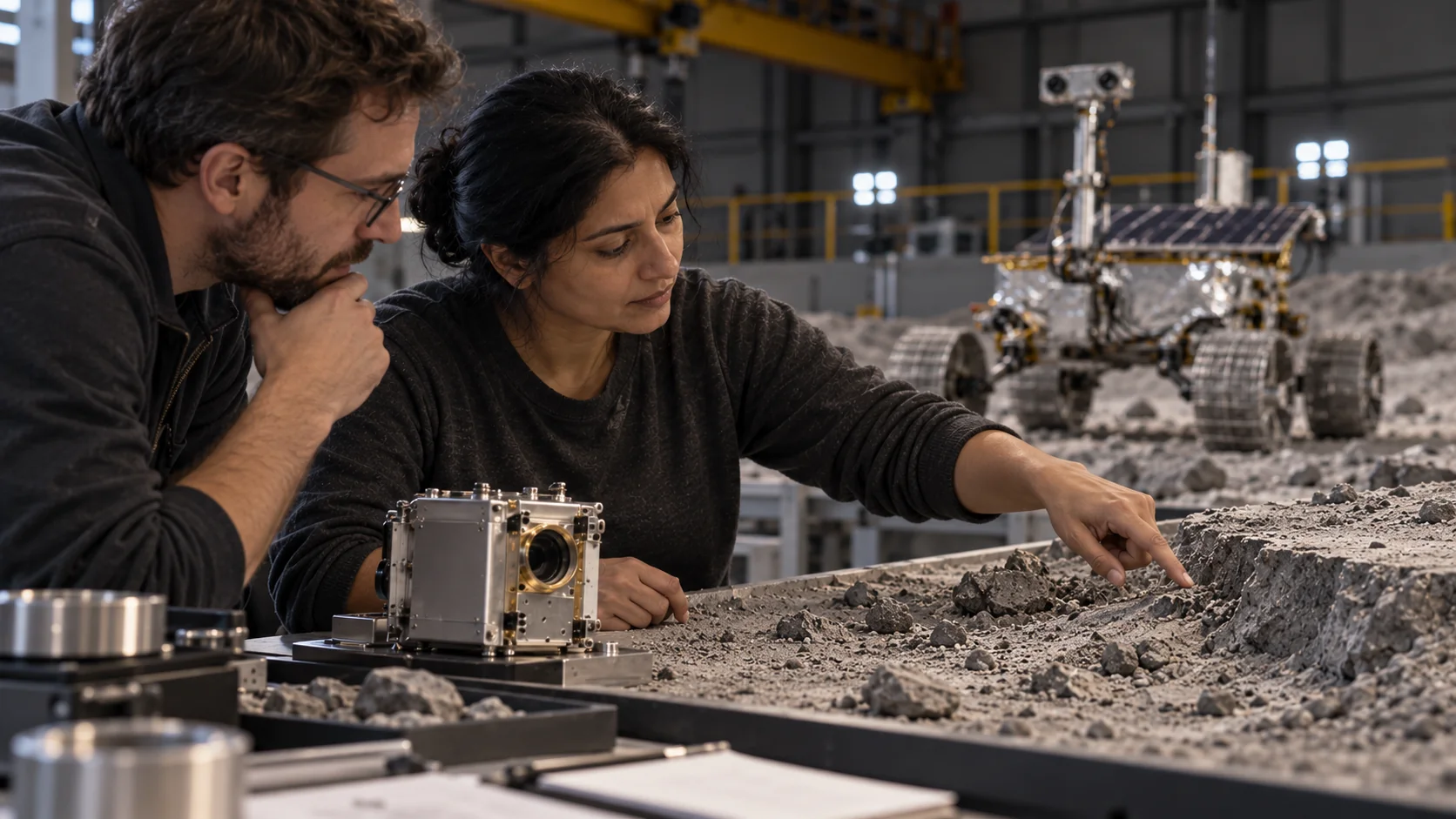
A JPL scientist wants to measure water in the ground near the Moon's south pole. The measurement is only useful where the rover can drive, where the instrument can work, and where the result would change what scientists know. The first site turns out to be out of reach.
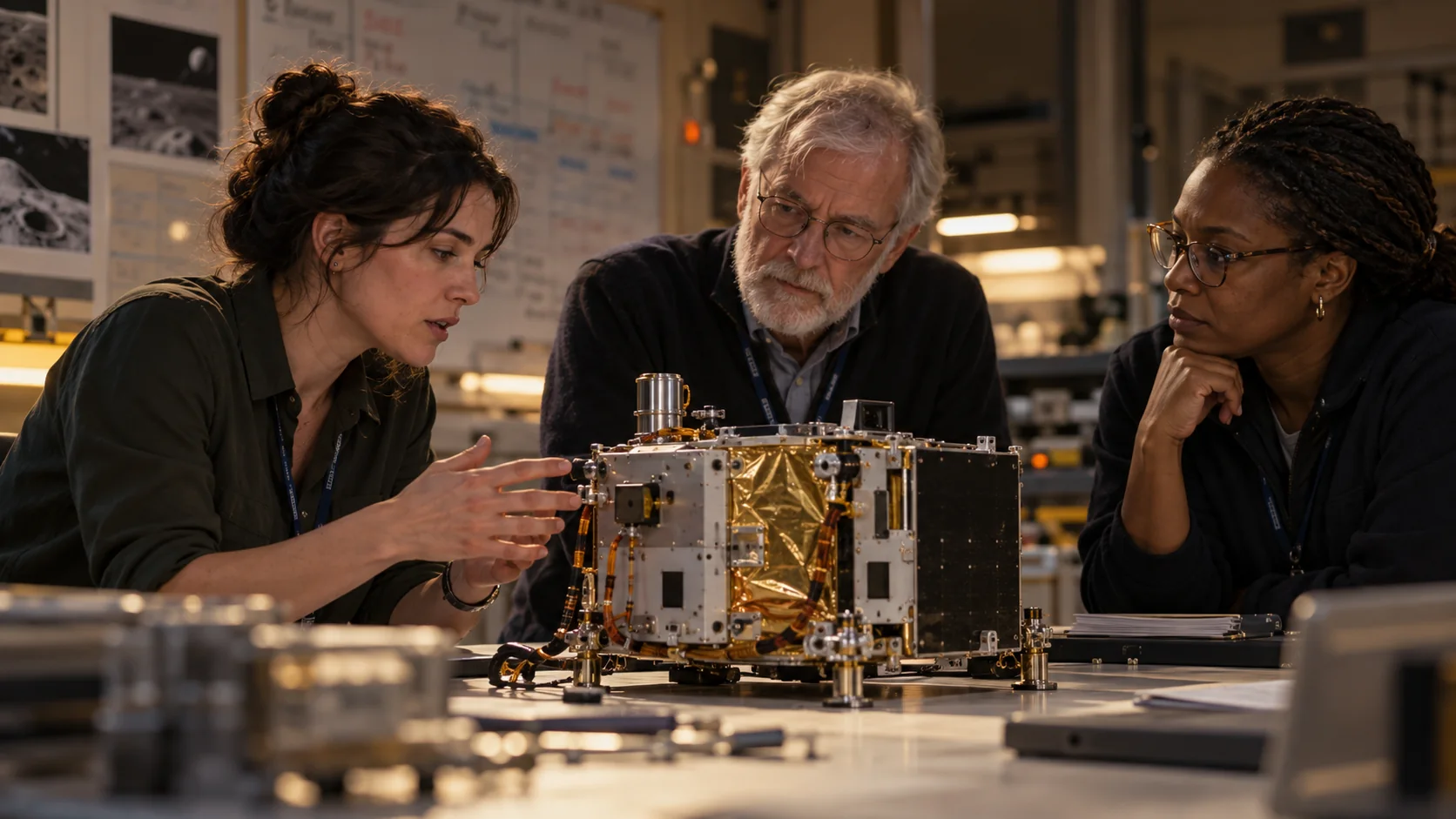
By working out how precisely the rover knows its own position, the team finds a second site the rover can reach. Results like this help decide where to drill and where to build, and the rover's position depends on the same timing signals that the rest of the lunar system will use.
Facts about this work
- Year
- 2026
- Medium
- Film
- Length
- 2:21
- Series
- JPL science support, twelve scenarios
- Setting
- The lunar south pole and a rover test yard
- Editions
- Desktop film; six-wall immersive room edition
- Production
- AI-generated stills and video, recorded narration, captions
Stills